
Aspinwall RiverTrail Park
In 2017 a group of grassroots community greening pioneers, the founders of the organization now known as the “Aspinwall RiverTrail Park,” successfully reconnected Aspinwall to the Allegheny River after many years of separation. Since then, the Aspinwall RiverTrail Park has proven to be a resourceful model for its sustainability, its role as a social hub, and its ability to provide multiple experiences in a limited space. The campus has certainly captured the public’s imagination as one of the most innovative greenspaces in the Pittsburgh region.
In the future, bikeways will connect the park directly to Shadyside and Downtown. Also, new housing will soon spring up along the river. Located in Aspinwall adjacent to Pittsburgh’s extreme Northeast edge, the park is poised to become an important gateway from the city to the surrounding countryside.
Located at the center of the park, a converted marina has become a popular event venue since its renovation. However, the existing complex contains very little indoor event space and there is no space for offices or meetings. Additionally, the existing buildings rise up from a sea of concrete and asphalt. Today, expansion is necessary.
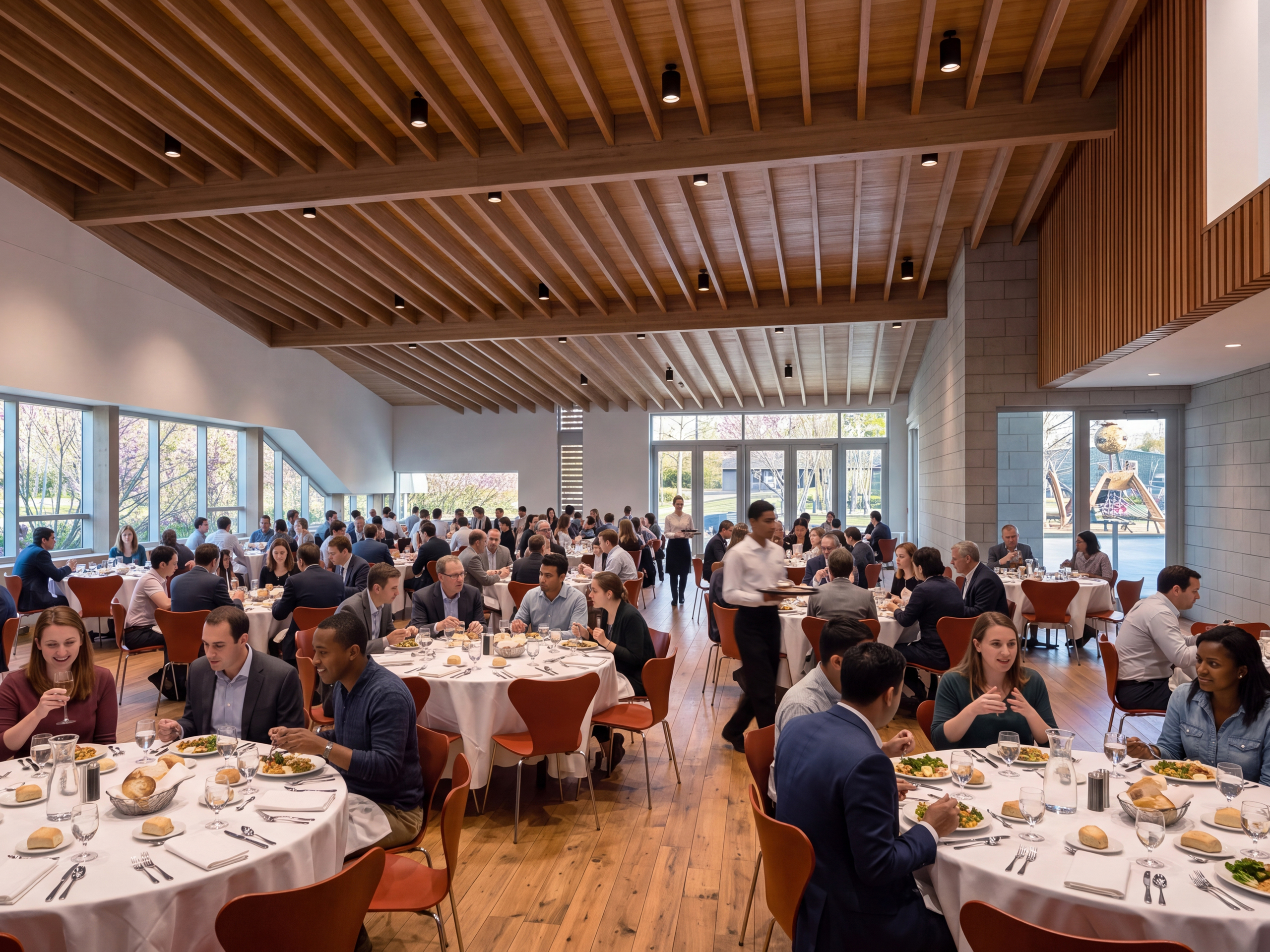
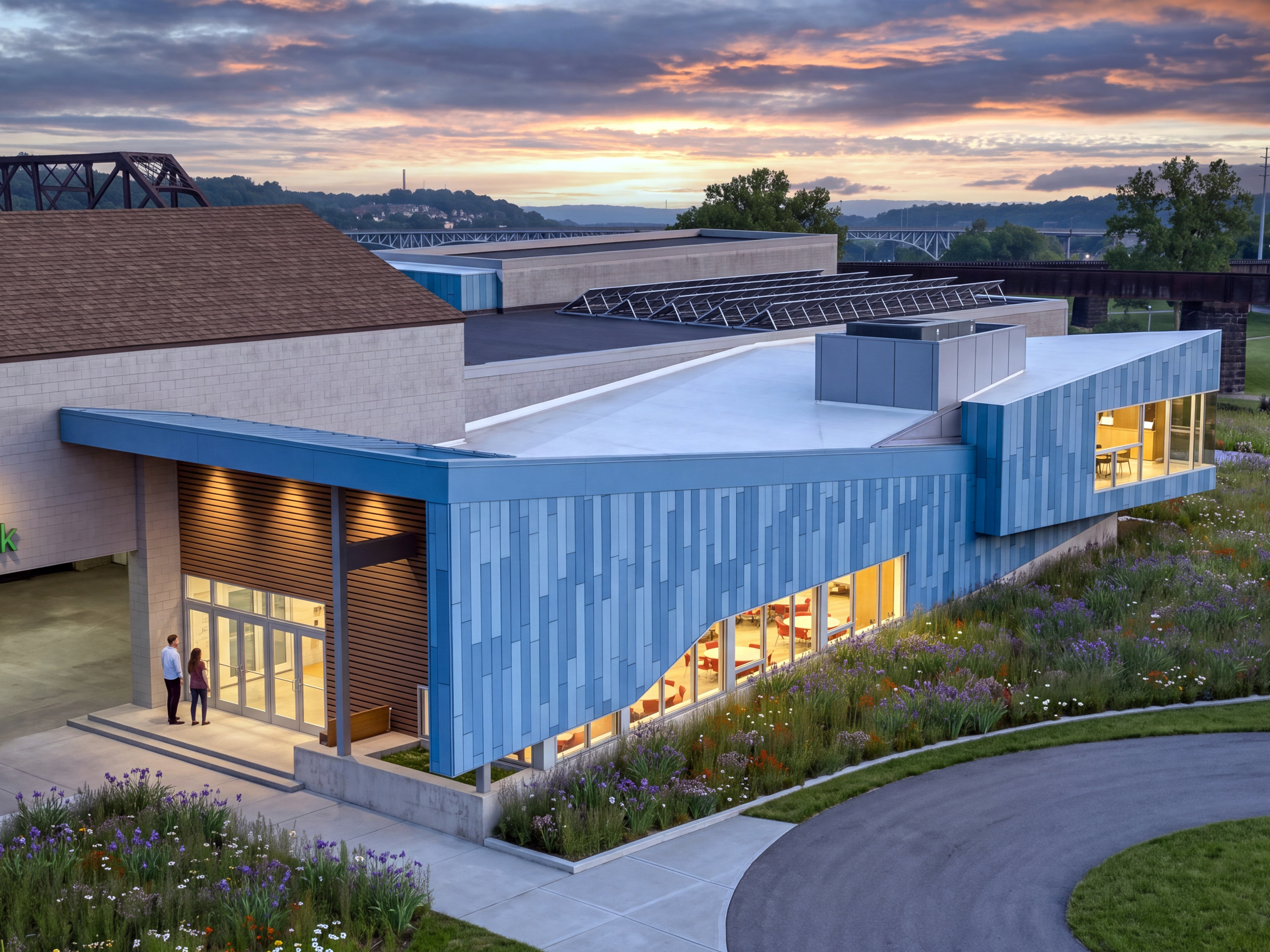
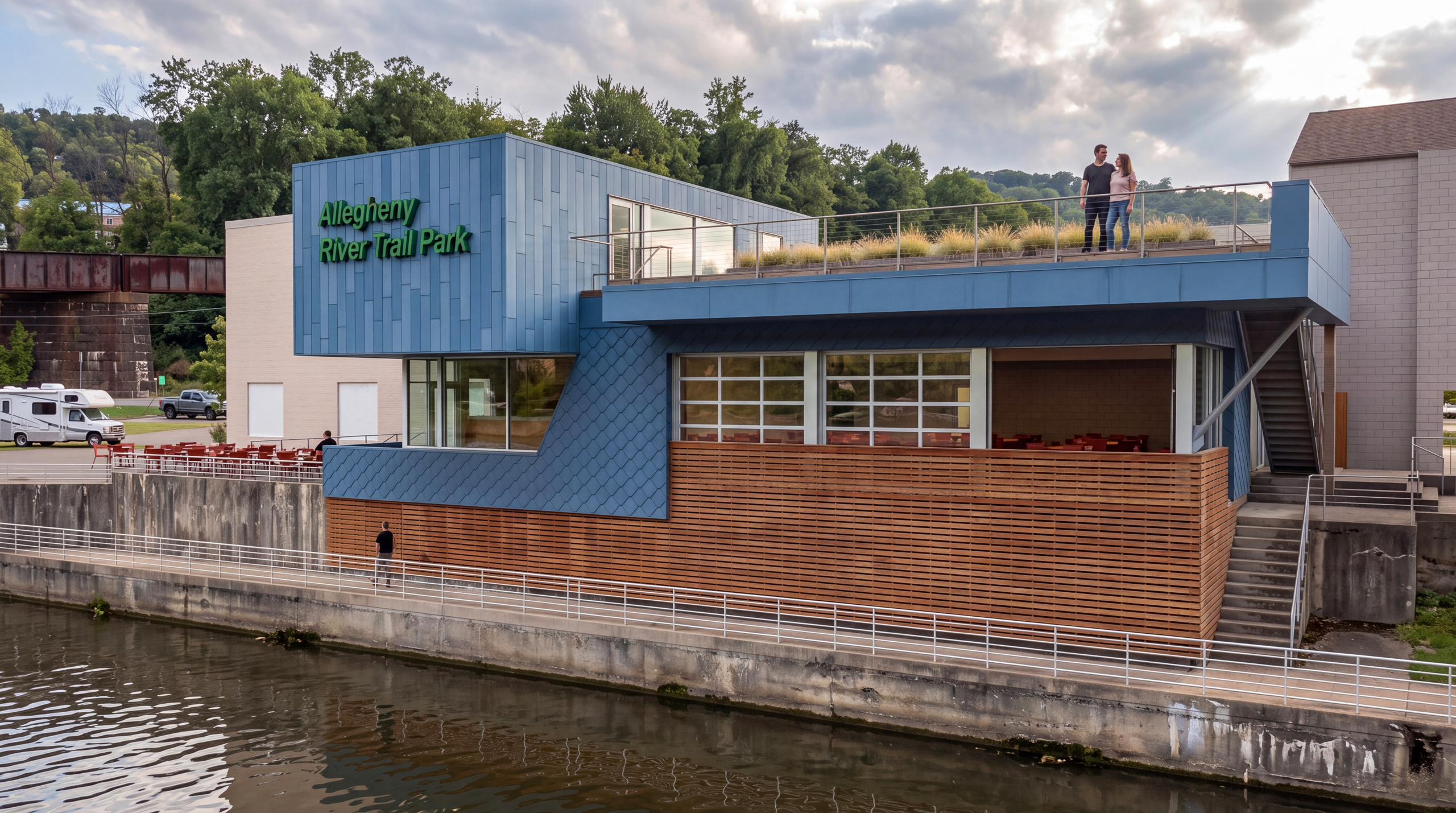
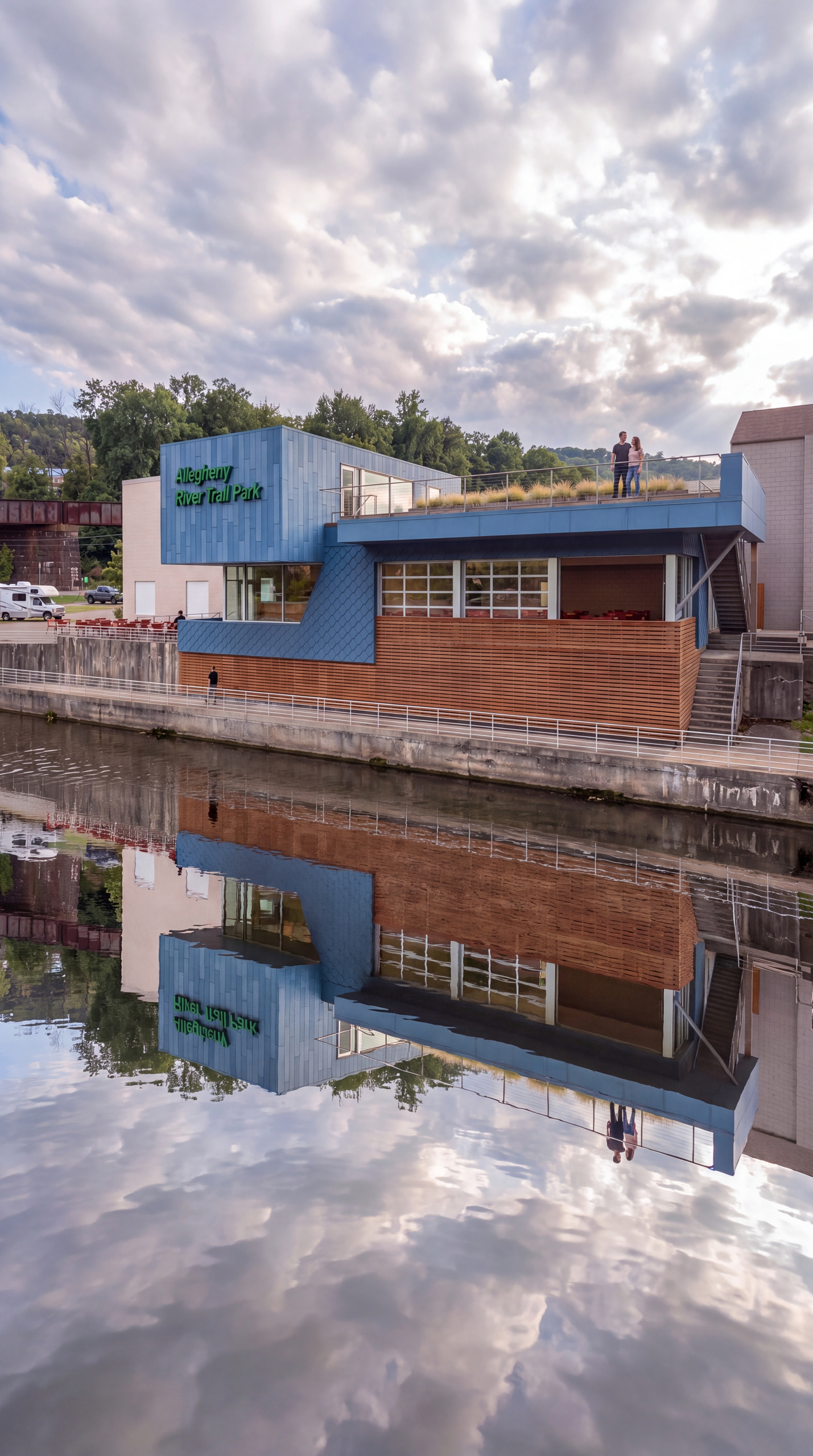
The primary project design goals are to a) expand the existing successful building programs and b) to reconnect the buildings to the park they serve. In the future, an indoor event space for one hundred and sixty people will face Aspinwall and a party space with a roof deck above will look out over the river. As well, new administrative spaces will overlook both the park and the indoor spaces. The new construction will be foregrounded with trees and a wildflower garden.
Pittsburgh deserves new buildings that are the equal of those now being constructed around the world. Similar to the High Line in New York, the project transforms obsolete infrastructure into usable public space. The completed Center will certainly become an icon of contemporary Pennsylvania architecture that can hold its head up high with other recently constructed Pittsburgh park buildings like the “Frick Environmental Center” and the “Grable Visitor Center” at the Frick Museum.